Grandma’s Crystal Bowl: From Stale Jelly Beans to Strategic Clarity
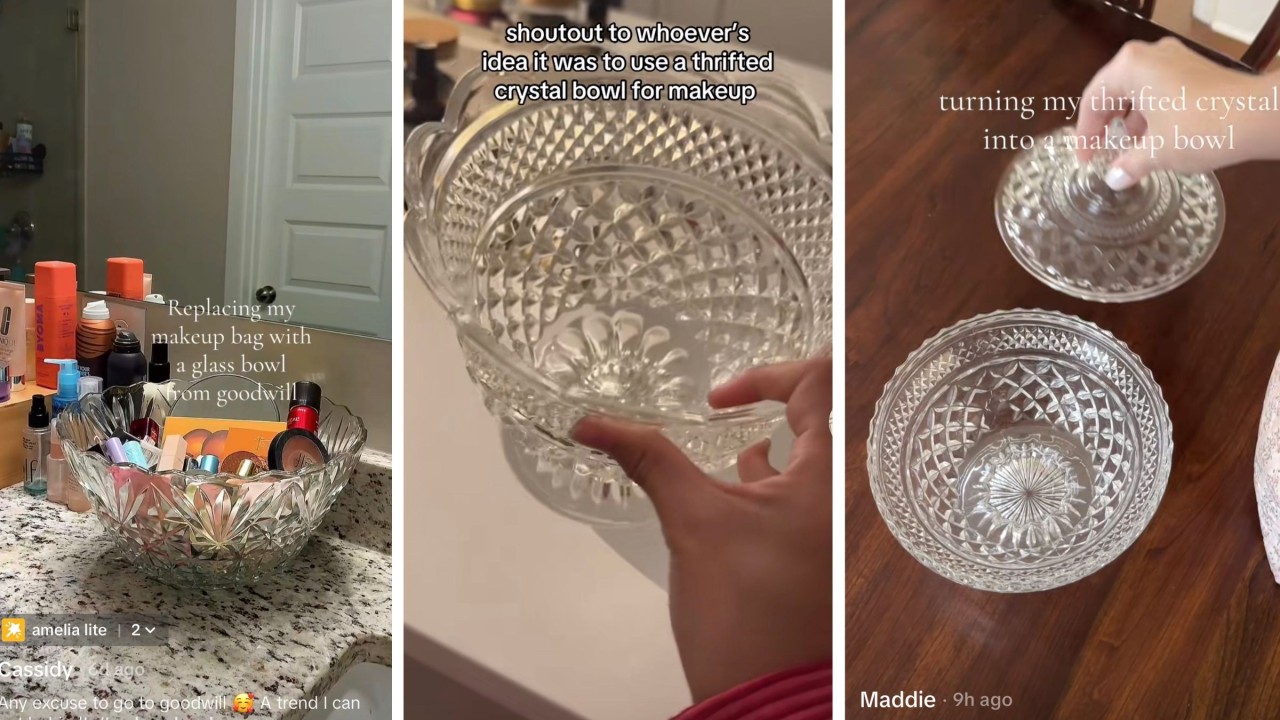
There’s a micro-trend circulating right now on TikTok that is oozing culture. Makeup bowls. Crystal bowls, specifically. Vintage glassware pulled from cabinets, dusted off from attics or thrifted and repurposed to hold makeup in plain sight.
This IS your grandmother’s crystal bowl. Point. Blank. Period. You know the one that held the stale jelly beans that were untouched on the oak coffee table with large wooden legs? C’mon Millennials I know you remember…you ate that dusty old licorice jelly bean, didn’t you?…. Anyway…
That same crystal bowl that once communicated restraint, formality, and “do not touch” energy once proudly displayed in glass door cabinets next to pristine china sets are now holding lipsticks, blushes, mascara etc.
This trend matters because aesthetics are rarely just aesthetics. I believe this is a signal and when a signal shows up across beauty, behavior, and culture at the same time, I like to slow down and do some inspection…
1. The modern makeup bowl is showing us that activation trumps preservation
This distinction matters because a lot of organizations are still branding themselves like a stale jelly bean bowl. Polished, legacy-heavy, beautiful, yet somehow functionally disconnected. According to the Edelman Trust Barometer, trust in institutions remains below 50% globally, with respondents citing lack of transparency and perceived performative values as top reasons for disengagement.
2. The modern makeup bowl is showing us that a messy display builds trust
No matter how messy you are, you must inhabit the counter…
Makeup has been tucked away in drawers, zippers, the collapsible thingy that hangs on the door, cup holders (yea I see you!). Your banana powder screams “apply me privately so the results can appear effortless”. The makeup bowl flips this logic. Now the tools are visible and curated and somehow magically, utility turns into identity. The curated makeup bowl says, “This is my mess and it lives here loudly”. No matter how messy you are, you must inhabit the counter.
This is mirroring what’s happening in how people expect organizations to operate. Stakeholders care no longer for flawless execution and are asking to see the real work. Deloitte found that more than 70% of workers want leaders to be more transparent about how decisions are made, even when outcomes are uncertain or imperfect.
3. The modern makeup bowl is showing us that sometimes it’s not about efficiency
The bowl makes a moment and a memory and that’s a massive value-add.
The makeup bowl isn’t efficient. A zipper pouch is faster and a drawer is more practical and yet, people are choosing the bowl. Why? Because efficiency isn’t the only thing people optimize for anymore. They are optimizing for how something feels to interact with every day.
In our tech age, we’re learning that humans don’t always connect to what’s fastest and so intentionality is the real speed. The bowl makes a moment and a memory and that’s a massive value-add. Org leaders sometimes default to efficiency as the highest value and wonder why engagement is low. Some things need to be designed for meaning, resonance, belonging and sometimes even nostalgia.
4. The modern makeup bowl is showing us the cultural undercurrent of choice
It would be irresponsible for me to separate this aesthetic shift from the broader cultural moment and movement. In the wake of increasing restrictions on autonomy and personal choice, particularly impacting women, people are renegotiating control wherever they still can. I believe the repurposing of these bowls is a form of protest through daily rituals. The makeup bowl sits squarely in the center of personal agency made visible in the home. The structure remains but now it holds personal choice.
Can you create a culture of choice in your organization without losing authority? Yes. But it requires reframing what control actually means. A culture of choice means setting firm boundaries around what matters most while giving people real agency in how they move within those boundaries. People need to know their decisions actually count. Organizations can offer choice in how work gets done, where influence can be applied, and when voices are invited.
Curate Your Bowl.
Your brand already has a bowl. The only question is whether it’s full of dusty old jelly beans or tools people actually use. So org leaders, I made you a to-do list. Yes. I know. Something else to pile on top of your already growing 2026 workload. It’ll be quick I promise:
☑︎ Make one internal or external process visible to your team or stakeholders this quarter. Share how decisions are made, not just what was decided.
☑︎ Replace one polished message with a real one. Publish the context alongside outcomes. If something changed, say why. If something failed, say what shifted.
☑︎ Give teams and stakeholders a visible point of choice. Where can people opt in, shape direction, or see their influence reflected?
☑︎ Identify one legacy practice, value, or story that feels preserved but inactive. Reframe it and let it hold something current and messy instead of keeping it pristine.
☑︎ Audit your brand assets and values. Identify what is being displayed versus what is being used. Retire anything that exists only for the sake of optics.
This piece was originally published in my Branding for Impact newsletter on LinkedIn. Read the original and subscribe on LinkedIn for new editions.
Cover image: Sourced from TikTok creators: @carli_johnson01, @halland_242, @maddiegdyer